Key Takeaways
- India’s food export rules are getting more detailed, with specific rules for almost every item.
- You’ll need an Import-Export Code (IEC) and other documents like shipping bills and commercial invoices.
- Food safety is a big deal; FSSAI registration and following international quality standards are a must.
- There are government programs to help exporters, so look into those to see if you can benefit.
- Digital processes and online portals are now common for trade, making things faster but requiring digital know-how.
Navigating India Food Export Regulations 2024
Understanding the evolving regulatory landscape for food exports to India is paramount for any business aiming to enter or expand within this market. India’s trade policies are dynamic, with recent updates reflecting a move towards greater specificity and digital integration. The Directorate General of Foreign Trade (DGFT) has introduced a more granular, item-level classification system, aligning with global customs practices. This reform means that even goods previously considered “free” for export may now have item-specific conditions. This detailed classification framework is key to determining whether an item falls under ‘Free,’ ‘Restricted,’ ‘Prohibited,’ or requires export through State Trading Enterprises (STEs). Key stakeholders involved in this process include the Food Safety and Standards Authority of India (FSSAI), which sets food safety and quality standards, and customs authorities responsible for clearance. Compliance checkpoints are becoming increasingly digitized, requiring businesses to adapt to electronic filing and assessment systems. For instance, the FSSAI has announced new registration requirements for foreign food manufacturing facilities intending to import specific products like milk, meat, and infant foods into India, with an implementation date of August 31, 2024. Staying informed about these requirements is vital for avoiding shipment delays. You can find more information on the FSSAI Manual for Food Imports.Understanding the Evolving Regulatory Landscape
The regulatory environment for food exports to India is undergoing significant transformation. A notable shift is the implementation of a more granular, item-level classification system across all ITC (HS) codes, introduced by the DGFT in January 2025. This system standardizes the 8-digit ITC (HS) classification, aligning it with international customs practices. The reform also introduces item-specific conditions, even for goods previously classified as “free.” This creates a clear categorization framework:- Free: No export license is required.
- Restricted: Export is subject to authorization.
- Prohibited: Export is not permitted.
- State Trading Enterprises (STEs): Export is allowed only through designated entities.
Key Stakeholders and Compliance Checkpoints
Several entities play a role in the Indian food export process. The Food Safety and Standards Authority of India (FSSAI) is central to setting and enforcing food safety and quality standards. Foreign manufacturing facilities producing specific categories of food products, such as milk and milk products, meat and meat products, and infant foods, must be registered with FSSAI. The implementation date for these new registration requirements is August 31, 2024. The U.S. Food and Drug Administration (FDA) is working to establish export lists for dairy products to India, with applications for inclusion being accepted. Businesses should monitor these lists and ensure their facilities meet the necessary criteria. Customs authorities, operating through platforms like ICEGATE, manage the clearance process. This process is increasingly digitized, with electronic filing of Shipping Bills and faceless assessment systems in place. Compliance checkpoints now heavily rely on digital submissions and adherence to specific documentation requirements. Understanding the Import-Export Procedures in India is essential for navigating these checkpoints effectively.Documentation Requirements for Seamless Exports
While documentation requirements remain broadly consistent, the submission process is now almost entirely digital. For exports, key documents include the Shipping Bill, commercial invoice, packing list, and transport documents like the bill of lading or airway bill. Regulatory compliance also involves GST filings and, where applicable, Registration-cum-Membership Certificates (RCMC). The RCMC is primarily mandatory for those seeking benefits under the Foreign Trade Policy (FTP).The shift towards digitized trade processes means that accuracy and timely submission of electronic documents are critical. Businesses should familiarize themselves with the digital platforms used for filing and tracking export documentation to avoid potential delays or complications. This includes understanding the requirements for obtaining a digital Certificate of Origin (CoO) through the DGFT platform, particularly for exports benefiting from trade agreements.For businesses looking to streamline their export operations, understanding these documentation requirements and the digital submission processes is a critical step. Purolean.com/#contact
Export Classification and Policy Reforms
The landscape of Indian export regulations is dynamic, with recent reforms aimed at creating a more precise and efficient system. Understanding these changes is key for any business involved in international trade.Granular Item-Level Classification System
India has moved towards a more detailed classification system for exports. This means that regulations and requirements are now often tied to very specific product codes, rather than broader categories. The Directorate General of Foreign Trade (DGFT) revised Schedule II (Export Policy) in January 2025 to implement this. The system now uses a standardized 8-digit ITC (HS) classification, which aligns with global customs practices. This granular approach means that even goods previously considered ‘free’ to export might now have item-specific conditions attached.Understanding Export Categories: Free, Restricted, Prohibited
Under the updated framework, exports are clearly categorized. This helps businesses quickly identify what is required for their specific products:- Free: These goods can be exported without needing a specific license or authorization.
- Restricted: Export of these items is permitted, but only after obtaining the necessary authorization or license from the relevant authorities.
- Prohibited: These goods are not allowed for export from India.
- State Trading Enterprises (STEs): For certain goods, export is only permitted through designated government entities.
Impact of Foreign Trade Policy 2023 on Exports
The Foreign Trade Policy (FTP) 2023 has significantly influenced export procedures. It functions as a living document, with updates frequently issued through notifications, requiring businesses to actively monitor changes. The policy emphasizes a move towards end-to-end digitization of trade processes, including licensing and customs clearance. This digital shift, supported by automated compliance checks, aims to reduce errors and speed up clearance times. The policy also reflects a broader trend towards a compliance-driven framework where accuracy in product classification is paramount for determining licensing, duties, and overall eligibility. Businesses need to be aware of these shifts to maintain compliance and capitalize on export opportunities. Some policies, like elevated import tariffs, can impact the overall trade environment, as noted in restrictive trade policies.The ongoing digitization of trade processes, from licensing to customs clearance, is a major focus. This shift aims to create a more transparent and efficient system for all stakeholders involved in international trade.For expert guidance on navigating these evolving export classifications and policy reforms, consider consulting with trade specialists. purolean.com/#contact
Essential Documentation for Indian Food Exports
Getting your food products out of India and into international markets involves a specific set of paperwork. It might seem like a lot, but having these documents in order is key to avoiding delays and ensuring smooth trade. Think of it as the necessary steps to show your product is legitimate and ready for global consumers.The Role of Import-Export Code (IEC)
First off, if you’re involved in exporting, you absolutely need an Import-Export Code, or IEC. This is a unique 10-digit number issued by the Directorate General of Foreign Trade (DGFT). It’s pretty much your business’s passport for international trade. Without it, you can’t conduct any export or import activities. It’s a one-time registration, and it’s fairly straightforward to apply for online. This code links all your export transactions and is required by customs and banks.Shipping Bills and Commercial Invoices
When you ship goods, the Shipping Bill is your primary export document. It’s filed with customs and contains details about the exporter, the goods being shipped, their value, and the export scheme being used. It’s essentially your declaration to customs that you’re exporting. Alongside this, the Commercial Invoice is vital. This document details the transaction between you (the seller) and the buyer. It includes information like the buyer’s and seller’s names and addresses, the quantity and description of goods, unit price, total value, payment terms, and currency. It’s used for customs valuation and duty assessment in the importing country. A packing list, detailing the contents of each package, is also usually required.Certificates of Origin and Other Essential Documents
Depending on the destination country and any trade agreements in place, you might need a Certificate of Origin (CoO). This document certifies that the goods you’re exporting actually come from India. It’s often issued by authorized chambers of commerce or trade associations and is important for preferential tariff treatment. Other documents can include health certificates, phytosanitary certificates (especially for agricultural products), and quality inspection certificates, depending on the specific food product and the importing country’s regulations. For instance, specific food items like dairy, meat, and infant foods often have additional certification requirements. It’s always best to check the import requirements of the destination country well in advance.Proper documentation isn’t just about following rules; it’s about building trust with your international partners and ensuring your products reach their destination without unnecessary hurdles. Each document serves a purpose in the global supply chain, from customs clearance to payment processing.For a detailed checklist of documents, you can refer to resources that outline essential documents for exporting goods from India. Making sure all these pieces are in place from the start will save you a lot of trouble down the line. If you need assistance navigating these requirements, Purolean can help. Visit purolean.com/#contact to get in touch.
Food Safety and Quality Standards Compliance
 Ensuring your food products meet India’s stringent safety and quality standards is not just a regulatory hurdle; it’s a cornerstone of successful trade. The Food Safety and Standards Authority of India (FSSAI) oversees these requirements, and staying updated is key. Recently, FSSAI extended a directive related to import regulations by three months, highlighting the dynamic nature of these rules [bce0].
FSSAI Registration and Certification Requirements
All food businesses involved in the export of food products to India must comply with FSSAI regulations. This typically involves obtaining the necessary registrations or licenses, depending on the scale and nature of your operations. For many foreign food manufacturers, processors, and storage facilities, registration with FSSAI is mandatory for exporting certain categories of food to India. This process often requires the competent authority in the exporting country to recommend the registration of establishments. For instance, China’s GACC has similar registration requirements under Decree 248, affecting overseas food manufacturers exporting to China.Adherence to International Quality Standards (ISO, HACCP, GMP)
Beyond FSSAI’s specific mandates, aligning with internationally recognized quality and safety standards significantly bolsters your product’s credibility and market access. Certifications such as ISO 22000 (Food Safety Management Systems), HACCP (Hazard Analysis and Critical Control Points), and GMP (Good Manufacturing Practices) demonstrate a commitment to producing safe, high-quality food. These standards provide a framework for identifying and controlling potential hazards throughout the food production process. Many importing countries, including Saudi Arabia for fishery and honey products, require establishments to be listed as compliant with applicable food safety requirements by their competent authority.Specific Requirements for Dairy, Meat, and Infant Foods
Certain food categories face particularly rigorous scrutiny. For dairy products, meat, and infant foods, exporters must be aware of specific FSSAI guidelines and any additional requirements imposed by importing countries. For example, exporting to countries like Australia may require specific certification statements for human milk and milk products, attesting to donor origin, processing, and safety measures. It’s also important to note that regulations are evolving across regions, with changes like the upcoming Safety Assurance for Food Establishments (SAFE) framework in the Asia Pacific region set to replace existing grading systems [26cb].Maintaining meticulous records and ensuring full traceability from farm to fork is paramount. This not only aids in compliance but also builds trust with consumers and regulatory bodies alike.To ensure your products meet all necessary safety and quality benchmarks for the Indian market, consult with trade intelligence sources like Purolean. We can help clarify specific documentation and certification needs for your product category. purolean.com/#contact
Leveraging Export Promotion Schemes
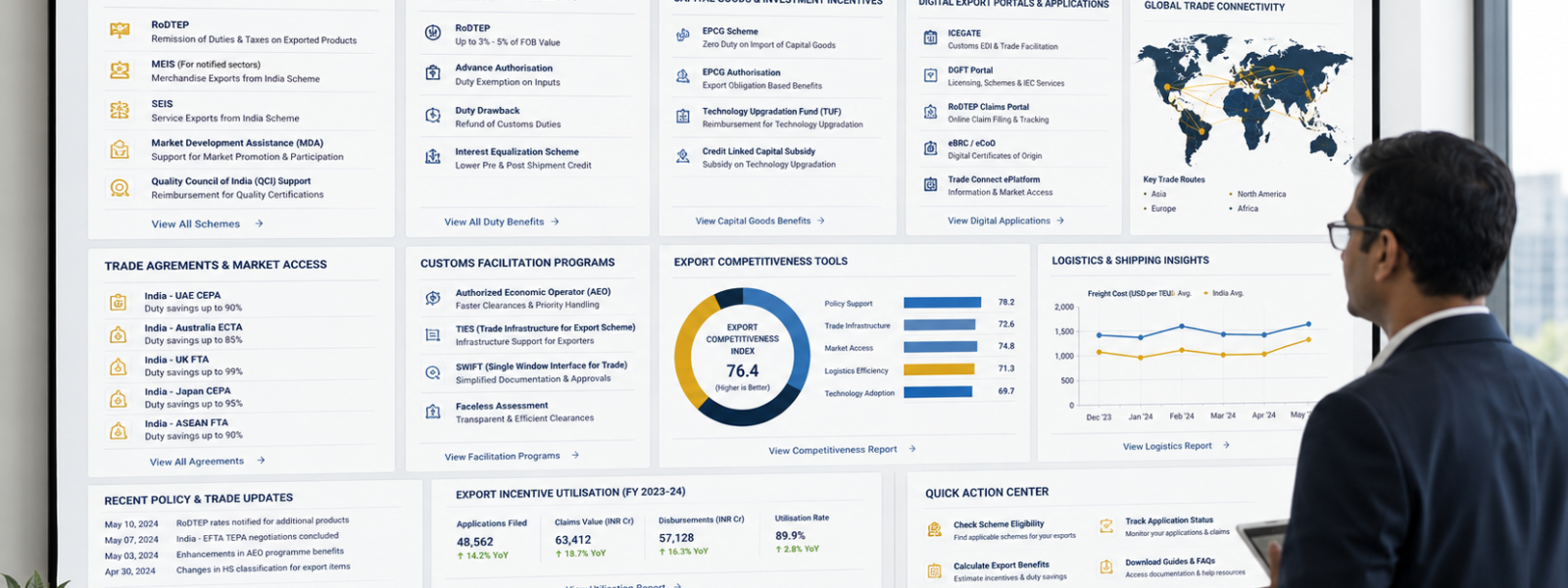
India continues to actively support its exporters through a variety of well-defined schemes designed to reduce costs and improve competitiveness in the global market. These initiatives are increasingly integrated into digital platforms, simplifying access and management for businesses.
Overview of Key Export Promotion Schemes
Several programs are available to assist exporters. These include:- Advance Authorization Scheme: Allows duty-free import of inputs required for export production.
- Export Promotion Capital Goods (EPCG) Scheme: Facilitates the import of capital goods for pre-production, production, and post-production at a reduced import duty.
- Remission of Duties and Taxes on Exported Products (RoDTEP): Reimburses embedded central, state, and local taxes and duties that are not otherwise remitted.
Digital Platforms for Scheme Application and Tracking
The Directorate General of Foreign Trade (DGFT) has digitized many of these processes. Exporters can now apply for, track, and manage benefits from these schemes through online portals. This digital integration aims to increase transparency and reduce processing times. For instance, the DGFT website serves as a central hub for accessing information and submitting applications related to various export promotion benefits.Benefits of Trade Agreements for Indian Exporters
India’s participation in various trade agreements offers significant advantages. These agreements often lead to preferential tariff treatment for Indian goods in partner countries, making them more competitive. Additionally, they can streamline customs procedures and reduce non-tariff barriers. Exporters should regularly review the terms of existing trade agreements and any new ones that are established, as these can open up new market opportunities. India presents substantial opportunities for food exporters, particularly with a growing middle class and increasing demand for diverse food options [a3af]. Government benefits for importers also aim to lower costs and improve efficiency [3538].The current trade policy environment emphasizes a digitized, compliance-driven framework. This means that staying informed about policy updates and utilizing digital tools for scheme applications and tracking is no longer optional but a necessity for maintaining a competitive edge in international trade.purolean.com/#contact
Risk Management and Trade Facilitation
Managing risks and facilitating trade are two sides of the same coin for any business looking to export from India. In today’s global market, understanding and mitigating potential pitfalls is just as important as knowing the export procedures themselves. This section looks at how businesses can protect themselves and streamline their operations.Trade Credit Insurance as a Risk Mitigation Tool
One of the most significant risks in international trade is non-payment by the buyer. Trade credit insurance acts as a safeguard against this, protecting exporters from financial losses due to buyer insolvency, protracted default, or political events in the buyer’s country. In India, while the Export Credit Guarantee Corporation (ECGC) is a primary provider, private insurers also offer comprehensive global coverage. This insurance typically covers 80-90 percent of potential losses, making it a cost-effective way to secure your revenue stream and enable expansion into new markets. It also improves access to trade finance by providing lenders with greater confidence in the exporter’s receivables.Utilizing Customs Compliance Information Portals
Navigating the complexities of customs regulations can be challenging. India has made strides in providing centralized resources to assist exporters. The Customs Compliance Information Portal (CIP) is one such tool, offering guidance on applicable regulations and approvals on a tariff-wise basis. When used in conjunction with platforms like the Indian Customs Electronic Gateway (ICEGATE), businesses gain better visibility into trade processes. This helps in predicting requirements and managing transactions more effectively, reducing the chances of delays or penalties. Staying informed about these resources is key for smooth international trade operations [aa4a].The Importance of Digitized Trade Processes
India’s commitment to digital trade facilitation is transforming the export landscape. The Single Window Interface for Facilitating Trade (SWIFT 2.0) is a prime example, integrating various government agencies into one electronic platform. This means importers and exporters can submit all necessary regulatory information through a single portal, significantly reducing paperwork and processing times. The system allows for real-time tracking of applications and automated alerts, leading to greater transparency and efficiency. Embracing these digital systems is not just about compliance; it’s about operational agility and competitiveness. Businesses that adapt quickly to these digitized processes are better positioned for success.The move towards end-to-end digital processing in trade is accelerating. This shift aims to create a more predictable and transparent environment for businesses, reducing the administrative burden and allowing them to focus more on their core operations and market development. Understanding and integrating these digital tools is becoming a competitive advantage.Key benefits of digitized trade processes include:
- Reduced documentation errors and processing times.
- Enhanced transparency and real-time tracking of shipments and approvals.
- Lower administrative costs associated with manual processes.
- Improved compliance through standardized electronic submissions.
- Greater access to trade finance and promotional schemes through integrated platforms.
Conclusion
Exporting food from India in 2024 involves understanding a lot of rules. It’s important to keep up with changes, especially with how things are getting more digital. Making sure all your paperwork is right and your products meet quality standards is key. Using the government’s online tools and promotion schemes can really help. By staying informed and prepared, businesses can successfully send their food products to other countries without too many headaches.Frequently Asked Questions
What is the most important thing to know about India’s food export rules for 2024?
The biggest change is that rules are getting super specific for each type of food. It’s not just general rules anymore; they look at each item closely. So, you really need to know exactly what you’re sending and what the rules are for that specific item.
Do I need a special license to export food from India?
It depends on the food. Some items are ‘free’ to export, meaning no special license is needed. But others are ‘restricted,’ and you’ll need permission or a special authorization from the government before you can send them out. It’s all about checking the specific category your food falls into.
What is FSSAI, and why is it important for food exports?
FSSAI stands for Food Safety and Standards Authority of India. Think of them as the food police for India. They make sure the food sold and exported is safe and good quality. You’ll likely need FSSAI registration or certification for your food products to be allowed to leave the country, especially for certain types like dairy or infant food.
Are there any government programs that can help me export food?
Yes! The Indian government has several programs designed to support exporters. These can help with things like getting paid faster, reducing taxes, or making it easier to get your goods to market. It’s a good idea to check out what schemes are available, as they could save you money and effort.
How has technology changed food exporting from India?
A lot! Most of the paperwork and processes are now done online. You’ll be filing documents digitally, tracking shipments through online portals, and applying for things electronically. This makes things quicker but means you need to be comfortable using computers and online systems.
What kind of documents do I usually need to export food?
You’ll typically need an Import-Export Code (IEC), which is like a business ID for trading. Then there’s the commercial invoice (a bill for your buyer), a packing list (what’s in each box), and a shipping bill (which tells customs what you’re sending). Depending on the country you’re sending to, you might also need a Certificate of Origin, proving where the food was made.