Introduction
India’s food exports exceed $50 billion annually, reaching over 150 destination countries — Purolean Global
When international buyers think of major food export nations, they tend to think of Brazil, Australia, the United States, the Netherlands, or Germany. India — despite being one of the world’s largest agricultural producers — is often underestimated as a food export origin.
That underestimation is becoming difficult to sustain.
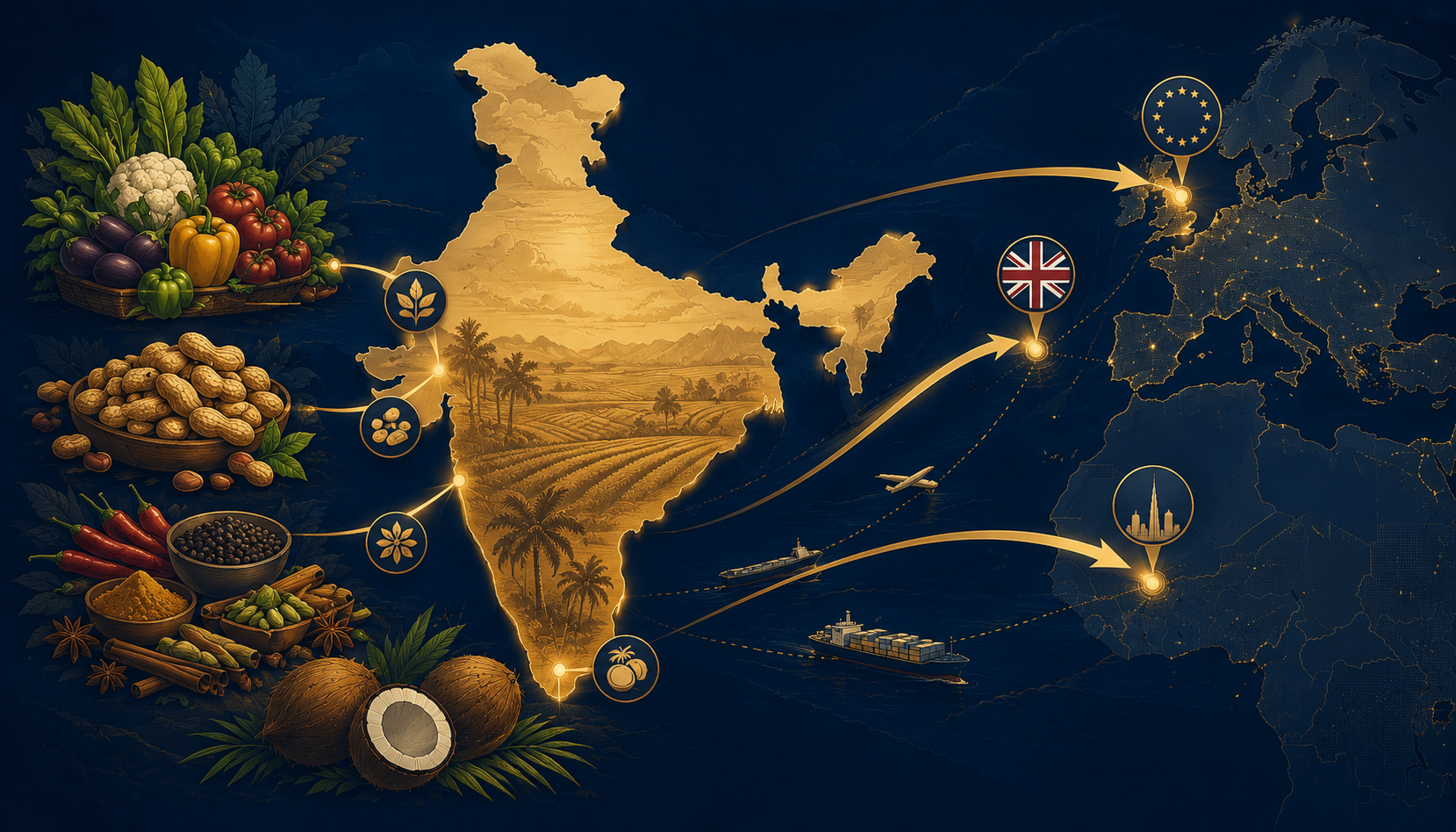
India’s food and agri exports have grown from approximately $25 billion USD in 2013–14 to over $50 billion USD in recent years, with continued growth trajectory despite global logistics challenges. The country supplies food products to over 150 destination countries, with the UAE, the United States, Bangladesh, Saudi Arabia, the Netherlands, and the UK among its largest markets.
For procurement managers, importers, and distributors in the Gulf and Europe, India offers a combination of capabilities that is increasingly rare: agricultural scale, product diversity, competitive pricing, improving food safety standards, and a business-friendly export ecosystem backed by government support programmes.
This article provides a comprehensive map of India’s food export landscape — the key commodity categories, the primary markets, the quality and compliance infrastructure, and the practical considerations for international buyers looking to source from India.
Section 1 — The Scale of India’s Agricultural Base
Any assessment of India as a food export origin must start with the extraordinary scale of its agricultural production.
India is:
– The world’s largest producer of milk, pulses, ginger, okra, and bananas
– The world’s second-largest producer of wheat, rice, groundnuts, vegetables, and fruits
– The world’s largest exporter of rice, buffalo meat, and spices
– A major global supplier of edible oils, processed food products, marine products, and organic commodities
This scale creates a sourcing environment with genuine depth. Unlike many specialist origins, India can supply large volumes of diverse food products simultaneously — making it viable as a primary sourcing origin rather than a supplementary one for multi-category buyers.
The agricultural base spans diverse agro-climatic zones: the Punjab plains producing wheat and grains, the Gujarat coast producing groundnuts and sesame, Kerala and Tamil Nadu producing coconuts, the Konkan coast and Maharashtra producing diverse fruits and vegetables, and the Northeastern states producing unique spice varieties. This geographic diversity is a resilience advantage — a climatic event in one region rarely affects production across all categories simultaneously.
Section 2 — Key Export Categories for International Buyers
Edible Oils — A Growing Export Category
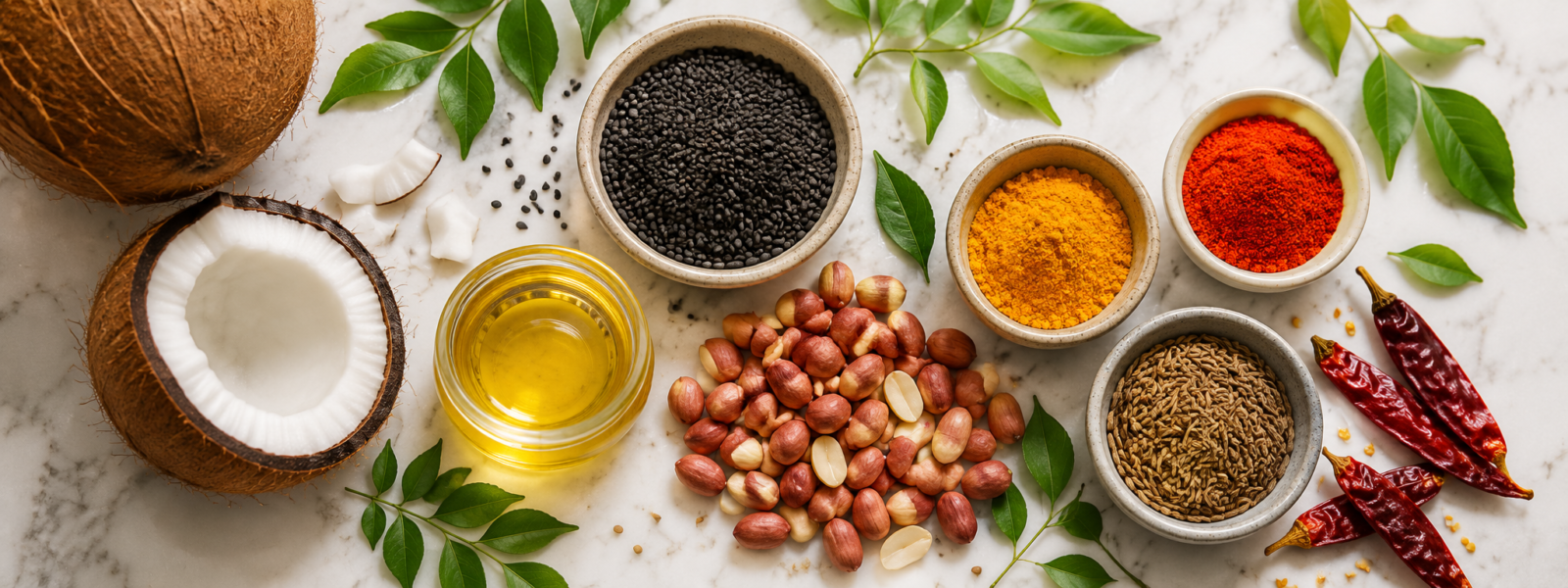
India is a significant exporter of processed edible oils, particularly cold pressed and expeller pressed varieties. Key categories include:
- Cold pressed coconut oil — primarily from Kerala and Tamil Nadu, increasingly certified organic and FSSAI-compliant for international markets
- Cold pressed groundnut (peanut) oil — primarily from Gujarat and Rajasthan; high natural oleic acid content makes it attractive for health-conscious food manufacturers
- Cold pressed sesame oil — from Rajasthan, Gujarat, and Maharashtra; globally in demand for food manufacturing, wellness, and retail
The cold pressed edible oil category is one of India’s fastest-growing export segments, driven by international consumer demand for minimally processed, chemical-free cooking oils. Indian producers have invested significantly in cold press extraction technology, quality testing infrastructure, and export certification to serve this market.
Rice and Grains
India is the world’s largest rice exporter, supplying Basmati and non-Basmati varieties to markets across the Gulf, Africa, and Europe. The category accounts for approximately 25–30% of India’s total agri export value.
Spices
India supplies approximately 40% of the world’s spices by volume, including pepper, turmeric, cumin, cardamom, coriander, and ginger. Indian spices are exported to over 180 countries.
Fresh Fruits and Vegetables
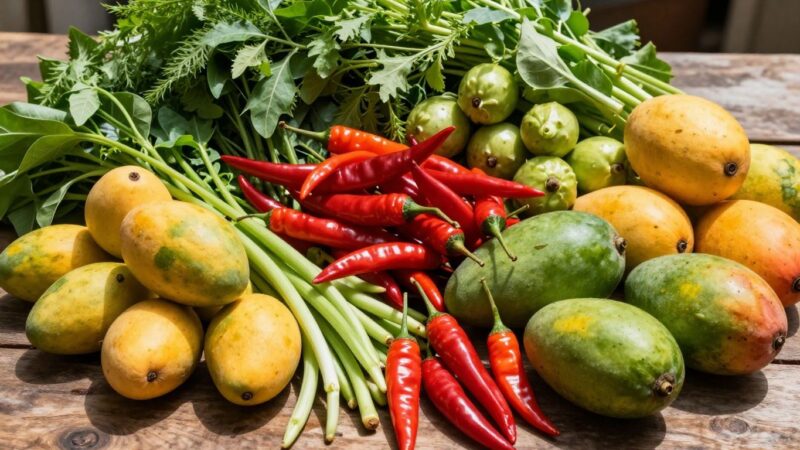
Maharashtra and Gujarat are major export origins for fresh produce — including onions, grapes, pomegranates, mangoes, and fresh vegetables. The fresh produce export sector has invested in post-harvest infrastructure and cold chain development to improve quality on delivery.
Processed and Value-Added Foods
India’s processed food export sector includes ready-to-eat products, condiments, dairy products, confectionery, and branded ethnic food products. This is a growing category as Indian food culture gains international mainstream acceptance.
Organic and Certified Products
India has the world’s largest number of organic producers and a growing certified organic area. Organic-certified products — including organic spices, oils, grains, and fresh produce — are increasingly available for international buyers seeking certified supply.
Section 3 — Primary Export Markets: UAE, UK, and Europe
United Arab Emirates
The UAE is India’s largest food export market by value, absorbing a diverse range of Indian food products including rice, fresh produce, spices, processed foods, and edible oils. The UAE’s large South Asian expatriate population drives demand for Indian food products, while the country’s role as a regional re-export hub means that Indian products reach markets across the Middle East, Africa, and beyond through UAE distribution channels.
Key considerations for UAE importers:
– ESMA (Emirates Standards and Metrology Authority) certification required for many food categories
– Halal certification required for meat and poultry; increasingly required for processed food products
– Dubai Municipality food import requirements apply to specific categories
– Strong cold chain infrastructure supports fresh and chilled product imports
United Kingdom
The UK is a growing market for Indian food exports, with demand driven by a large South Asian community, mainstream adoption of Indian cuisines, and growing consumer interest in organic and natural food products. Post-Brexit, the UK has developed its own import regulatory framework independent of the EU — a complexity for suppliers but also an opportunity for those who navigate it early.
Key considerations for UK importers:
– UK Border Control Post (BCP) inspection requirements for food and feed from third countries
– DEFRA import notification requirements via IPAFFS (Import of Products, Animals, Food and Feed System)
– UK-India Free Trade Agreement negotiations (ongoing as of 2025) expected to reduce tariff barriers when concluded
– Growing retail demand for premium Indian food products — cold pressed oils, premium spices, organic products
European Union
The EU is a major market for Indian marine products, rice, spices, and organic commodities. EU food safety standards (Regulation EC 178/2002 and subsequent regulations) are among the most demanding globally — but also provide market access to 450 million consumers when met.
Key considerations for EU importers:
– EU Regulation 2017/625 (Official Controls Regulation) governs food import procedures
– Novel foods regulation may apply to certain Indian products with limited European consumption history
– Organic certification requirements for EU market claims (EU organic logo)
– Strong demand for Indian spices, rice varieties, and organic commodities in German, Dutch, UK, and Nordic markets
Section 4 — India’s Quality and Compliance Infrastructure
A common concern among international buyers considering Indian sourcing is the quality and compliance infrastructure. The landscape has improved significantly and continues to develop.
FSSAI (Food Safety and Standards Authority of India) — the primary regulatory body for food safety in India. FSSAI registration and licensing are mandatory for food businesses including exporters. FSSAI standards are increasingly aligned with Codex Alimentarius international standards.
ISO 22000 and HACCP — widely adopted among established Indian food exporters, particularly those targeting EU, UK, and UAE markets. These certifications provide internationally recognised evidence of quality management system implementation.
GMP (Good Manufacturing Practice) — required by most international buyers as a baseline certification for food manufacturers.
APEDA (Agricultural and Processed Food Products Export Development Authority) — the government body responsible for developing and promoting India’s agri and processed food exports. APEDA provides certification, market intelligence, and quality development support to registered exporters.
Lab testing infrastructure — India has a growing network of NABL-accredited (National Accreditation Board for Testing and Calibration Laboratories) testing laboratories providing food safety, chemical residue, and nutritional analysis services.
The most reliable way for international buyers to assess an Indian supplier’s compliance profile is to request copies of current certifications, require batch-specific lab reports, and conduct or commission a facility audit. The certification landscape has depth — the challenge is distinguishing genuinely compliant exporters from those holding outdated or misrepresented credentials.
Section 5 — The Practical Case for Sourcing from India
For importers and distributors in the UAE, UK, and Europe, the case for developing Indian sourcing relationships rests on several converging factors:
Price competitiveness — Indian agri commodities are priced competitively relative to equivalent products from Western origins, particularly for organic and specialty categories.
Volume availability — India’s agricultural scale means that large-volume requirements can typically be met from multiple approved suppliers without market-moving price impact.
Product diversity — a single trade relationship with an established Indian exporter can provide access to a diverse product portfolio, reducing the number of supplier relationships required to cover a category range.
Government export support — India’s government actively supports food exports through schemes including RoDTEP (duty and tax remission), EPCG (export promotion capital goods), and various APEDA development programmes. This support reduces the cost burden on exporters and indirectly supports competitive pricing for buyers.
Growing certification maturity — the number of Indian food exporters holding internationally recognised quality certifications has grown significantly. Buyers who invest in finding and qualifying strong suppliers are accessing genuinely improving quality infrastructure.
Strategic alignment — India’s diplomatic and trade relationships with the UAE, UK, and EU are broadly positive and improving, reducing the geopolitical risk that affects some alternative sourcing origins.
Practical Takeaways
- India is a primary sourcing origin, not a supplementary one — its agricultural scale, product diversity, and improving compliance infrastructure make it viable as a core supply relationship.
- Prioritise certified exporters — FSSAI, ISO 22000, HACCP, GMP certification is the baseline; organic certification where relevant to your market.
- Understand destination market requirements — UAE (ESMA/Halal), UK (BCP/DEFRA/IPAFFS), EU (Regulation EC 178/2002) each have specific import requirements. Work with a freight forwarder experienced in India-origin shipments.
- Conduct facility audits before significant orders — the certification landscape in India has depth; direct audits distinguish genuine compliance from credential presentation.
- Monitor trade policy developments — the UK-India FTA and EU-India FTA negotiations are ongoing; conclusions will have material implications for import costs and market access.
Conclusion
India’s position as a global food export powerhouse is well-established in aggregate but under-appreciated by many international buyers who have not yet built sourcing relationships in the country. The trajectory is clear: growing volumes, improving quality infrastructure, expanding certification adoption, and positive trade relationship development with key destination markets.
For importers and distributors in the UAE, UK, and Europe, developing qualified sourcing relationships with Indian exporters now — before the FTA frameworks that will further reduce trade friction are concluded — positions buyers advantageously for the medium-term market environment.
The opportunity is significant. The infrastructure exists. The question is which buyers will move first.
FAQ Section
Q: What are India’s most important food export commodities by volume?
A: Rice is the largest category by volume and value, followed by marine products, spices, fresh fruits and vegetables, and processed food products. Edible oils — including cold pressed coconut, groundnut, and sesame oil — are a growing export category.
Q: How do I find a reliable food exporter in India?
A: Start with APEDA’s registered exporter database. Verify certifications independently (FSSAI registration can be checked online). Request batch-level lab reports. Conduct or commission a facility audit before placing significant orders. References from existing buyers are valuable.
Q: What certifications should I require from an Indian food supplier?
A: Minimum: FSSAI registration, ISO 22000, HACCP, GMP. Additionally: organic certification (for organic claims in UK/EU), ESMA registration (for UAE), halal certification where required by your market or end customer.
Q: How long does shipping from India to the UAE, UK, or Europe typically take?
A: UAE: 10–20 days by sea. UK: 20–30 days by sea. Europe: 25–35 days by sea. Air freight is faster (3–7 days to all destinations) but significantly more expensive — typically viable only for high-value, time-sensitive products.
Q: Is India a reliable supply origin for large-volume orders?
A: For most commodity categories, yes. India’s agricultural scale means that large-volume requirements can typically be met. The key is working with established exporters who have the production relationships and logistics infrastructure to reliably service large orders, rather than aggregators or small-scale intermediaries.
Key Takeaways
- India is a top-five global food exporter across multiple commodity categories, with exports exceeding $50 billion annually.
- Key categories for international buyers include edible oils, rice, spices, fresh produce, and organic products.
- UAE, UK, and Europe are among India’s largest food export markets, each with specific import regulatory requirements.
- India’s quality and compliance infrastructure has improved significantly — FSSAI, ISO 22000, HACCP, GMP are widely adopted among established exporters.
- The India-UK and India-EU FTA negotiations, when concluded, will further reduce trade friction for Indian food exports.
Purolean Global is a certified Indian agri and food export company. We supply cold pressed coconut, groundnut, and sesame oils, fresh fruits and vegetables, and specialty food products to importers and distributors in the UAE, UK, and Europe. Reach out to discuss your import requirements.
CTA: Contact our export team to discuss sourcing from India.
→ [Contact Purolean Global at purolean.com]