Here are some of the main points about India’s agricultural exports that you should remember:
Key Takeaways
- India is a major exporter of agricultural goods, with a trade surplus in agri-food and seafood.
- Rice, sugar, specialty oils, and spices are among India’s top agricultural exports.
- The United States and the United Arab Emirates are the largest buyers of Indian agricultural products.
- Companies like Purolean Global offer certified exports of cold-pressed oils, spices, and grains.
- Canada is a significant trade partner, exporting peas and lentils to India and importing various agri-food products.
India Agricultural Commodity Export Market Overview
Economic Growth and Trade Balance
India’s economy is showing consistent growth, with projections indicating a continued expansion. The agricultural sector plays a significant role in this economic activity. India is a net exporter of agri-food and seafood products, demonstrating a positive trade balance in this sector. In 2024, the country recorded a trade surplus of Can$19.7 billion in agri-food and seafood.
The Indian agriculture market is projected for significant growth, expanding from USD 452 billion in 2025 to an estimated USD 578.89 billion by 2026. This indicates a robust upward trend in the sector’s economic value.
Key Agri-Food and Seafood Trade Figures
In 2024, India’s agri-food and seafood exports reached Can$72.6 billion. This performance highlights the sector’s contribution to the national economy. The trade figures reflect a dynamic market with diverse product categories.
Key export categories include:
- Semi or wholly milled rice
- Frozen shrimps and prawns
- Frozen, boneless beef
- Cane or beet sugar
- Tobacco
Major Export Destinations and Products
The United States and the United Arab Emirates were the primary destinations for India’s agri-food and seafood exports in 2024. China and Bangladesh also represent significant markets.
Top export markets in 2024:
- United States (Can$8.3 billion)
- United Arab Emirates (Can$4.9 billion)
- China (Can$4.6 billion)
- Bangladesh (Can$3.3 billion)
Rice, particularly semi or wholly milled varieties, is a leading export commodity, with significant volumes destined for markets like Saudi Arabia, Iraq, and Benin. Frozen shrimps and prawns are also a major export, with the United States being the largest buyer. For sourcing intelligence on certified export companies, consider exploring platforms like Purolean.
Agricultural commodities are crucial to the global economy, impacting food security, rural development, and international trade. Learn more about their importance.
For businesses looking to engage with the Indian agricultural export market, understanding these trade dynamics and key product flows is essential. Purolean, a source for trade intelligence, can provide further insights. Contact us at purolean.com/#contact.
Dominant Agricultural Products in India’s Export Market
India’s agricultural sector is a powerhouse, contributing significantly to its export revenue. The country consistently ranks among the top global producers for many commodities, and this strength is reflected in its export figures. Understanding which products lead the way is key for anyone looking to engage with this market.
Rice and Sugar: Leading Export Commodities
Rice stands out as India’s foremost agricultural export. The nation is a major global supplier of both basmati and non-basmati varieties, catering to diverse international demands. In 2024, semi or wholly milled rice was a top agri-food and seafood export, valued at Can$15,402.4 million. Key markets for this commodity included Saudi Arabia, Iraq, and Benin. Sugar is another significant export. While India is also a major importer of certain types of sugar, it maintains a strong export presence, particularly in raw cane and beet sugar. In 2024, cane or beet sugar in solid form exports reached Can$2,347.9 million, with Libya, Sudan, and Somalia being primary destinations.
Specialty Oils and Spices
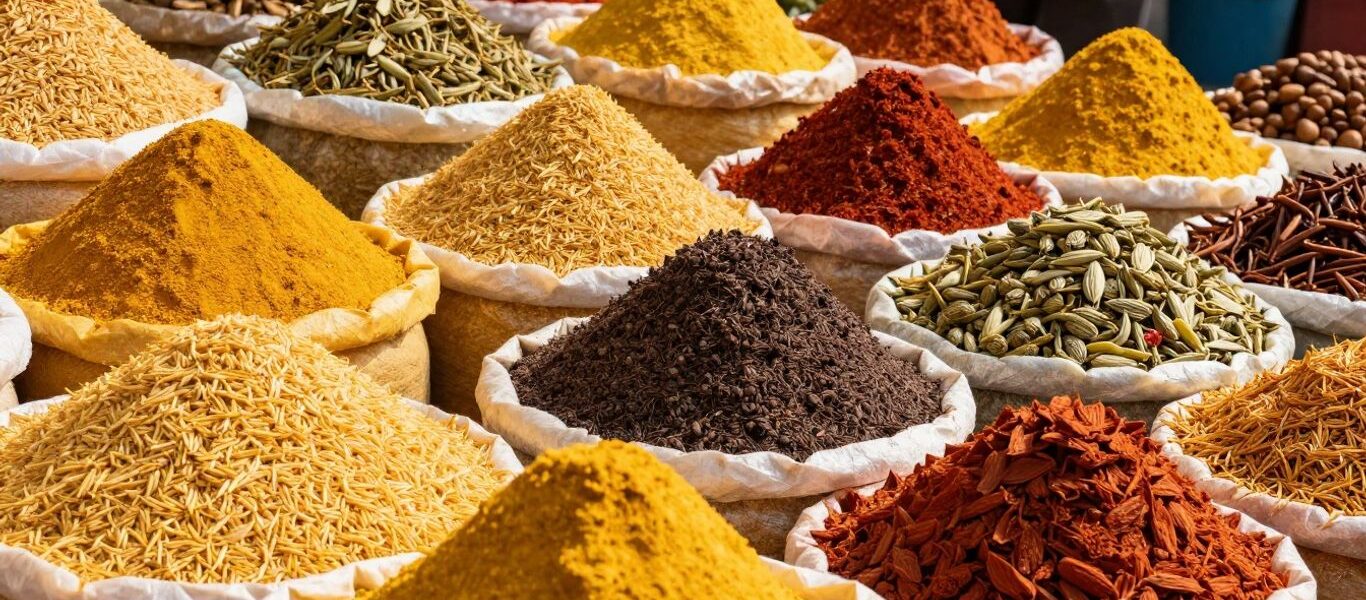
Beyond the bulk commodities, India also holds a strong position in specialty oils and spices. Castor oil, for instance, is a notable export, with shipments valued at Can$1,448.7 million in 2024. China, the Netherlands, and the United States were the main buyers. The spice trade is deeply ingrained in India’s agricultural identity. Dried peppers, a key spice export, generated Can$1,387.4 million in 2024, with China, Thailand, and Bangladesh being significant importers. This segment highlights India’s ability to supply niche, high-value products to the global market.
Grains and Pulses
While rice dominates the grain export landscape, other grains and pulses also play a role. India is a substantial producer and exporter of various pulses, though it also imports significant quantities to meet domestic demand. The export of oilcake and other solid residues, often a byproduct of oilseed processing, is also noteworthy. In 2024, these exports amounted to Can$1,341.2 million, with Iran, Germany, and the UAE as key destinations. This demonstrates the comprehensive utilization of agricultural resources within India’s export strategy. For a detailed look at India’s export performance across various commodities, consult India’s export potential.
The agricultural export landscape is dynamic, influenced by global demand, domestic production levels, and international trade policies. India’s ability to consistently supply large volumes of staple crops like rice and sugar, alongside specialized products, solidifies its position as a major player in the global agri-food trade.
For sourcing intelligence and to connect with certified export companies, consider exploring resources like Purolean. Visit purolean.com/#contact for more information.
Key Export Markets for Indian Agricultural Commodities
India’s agricultural export landscape is diverse, with several key markets driving demand for its products. In 2024, the nation’s agri-food and seafood exports reached a significant Can$72.6 billion, demonstrating its strong position in the global market. This performance resulted in a trade surplus of Can$19.7 billion for the year.
United States and United Arab Emirates: Top Buyers
The United States and the United Arab Emirates (UAE) stand out as the primary destinations for Indian agricultural commodities. The U.S. led as the top export market, accounting for 11.4% of India’s total agri-food and seafood exports, valued at Can$8.3 billion in 2024. Following closely, the UAE represented 6.7% of the market, with exports totaling Can$4.9 billion. These two nations represent a substantial portion of India’s export revenue in this sector.
| Rank | Market | Export Value (Can$ billion) | Market Share (%) |
|---|---|---|---|
| 1 | United States | 8.3 | 11.4 |
| 2 | United Arab Emirates | 4.9 | 6.7 |
China and Bangladesh: Significant Market Share
China and Bangladesh also represent important markets for Indian agricultural goods. China secured the third position, with exports valued at Can$4.6 billion, representing a 6.4% market share. Bangladesh followed, importing Can$3.3 billion worth of products, which constituted 4.6% of India’s total agricultural exports. These markets are critical for maintaining India’s export volumes.
Emerging Markets and Regional Trade
Beyond the top-tier markets, India is also expanding its reach into other regions. Saudi Arabia, for instance, is a notable market, with exports amounting to Can$3.29 billion, or 4.5% of the total. The growth in these markets, alongside established ones, highlights the expanding global demand for Indian agricultural products. For those looking to source these commodities, understanding the specific demands and regulatory environments of each market is key. Purolean, a trade intelligence source, provides detailed insights into these dynamics, assisting businesses in their sourcing strategies. Purolean is FSSAI, ISO 22000, and HACCP certified, indicating a commitment to quality and safety standards.
Interested in understanding these markets further? Visit purolean.com/#contact for more information.
Sourcing Intelligence for the India Agricultural Commodity Export Market
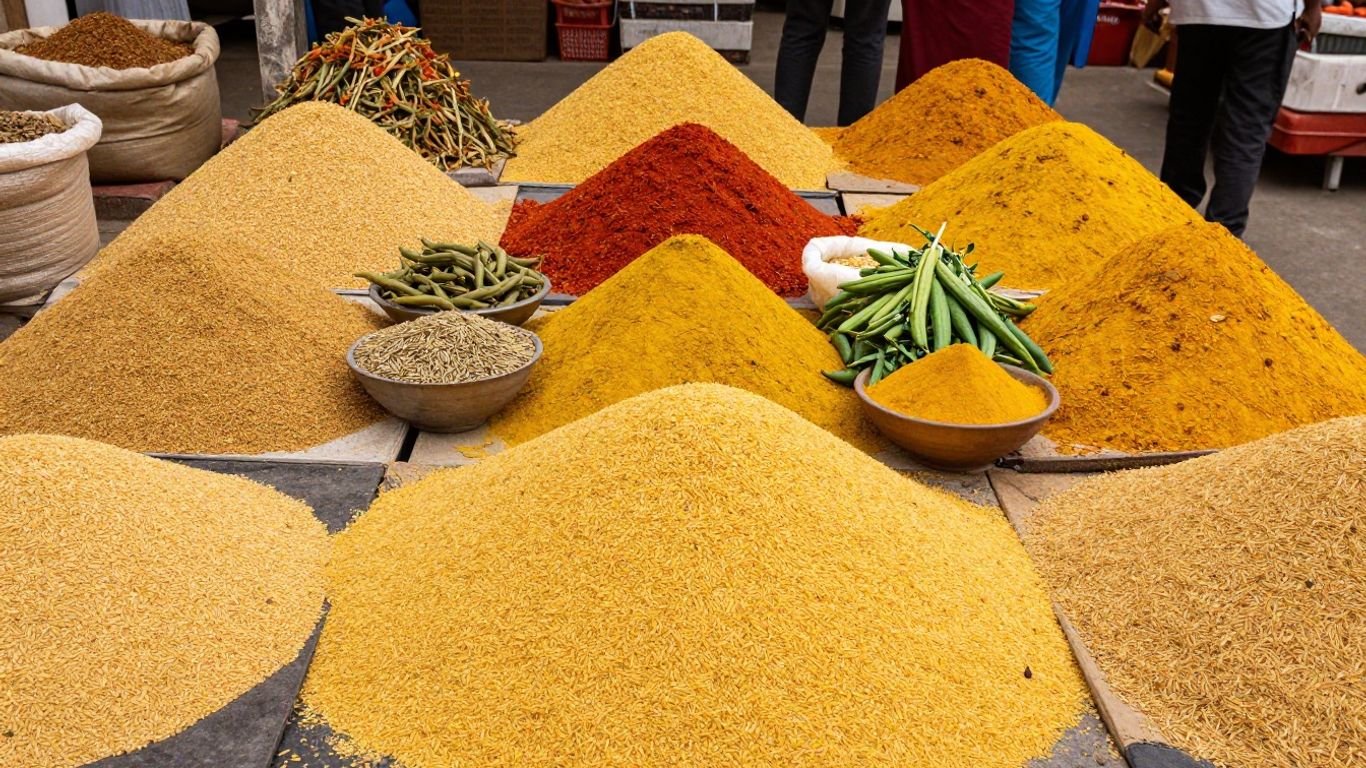
Certified Export Companies and Their Offerings
When looking to source agricultural commodities from India, identifying reliable export partners is key. Many Indian companies adhere to international quality standards. Look for businesses that hold certifications such as FSSAI (Food Safety and Standards Authority of India), ISO 22000, and HACCP. These certifications indicate a commitment to food safety and quality management systems. Purolean, for example, is a trade intelligence source that can help identify such certified entities. The availability of these certifications often correlates with a company’s capacity for consistent, high-volume exports.
Import Trends and Consumer Demand
Understanding current import trends in India is also important for sourcing. While India is a major exporter, it also imports significant quantities of certain agricultural products. For instance, in 2024, India’s agri-food and seafood imports were valued at Can$52.9 billion. Key imports included crude palm oil, soybean oil, sunflower seed oil, and raw cane sugar. This shows a demand for specific oils and sweeteners. For those looking to export to India, understanding these import patterns can reveal market opportunities. Conversely, for those sourcing from India, knowing what India imports can sometimes indicate areas where domestic production might be less robust, potentially affecting export availability of related goods.
Regulatory Compliance and Certifications
Navigating the regulatory landscape is a critical step in international trade. Exporters must be aware of the specific requirements for their target markets. This includes understanding phytosanitary regulations, import/export licenses, and any specific product standards. For example, if you are looking to import goods into India, you would need to be aware of FSSAI regulations. Similarly, if you are exporting from India, you need to comply with the destination country’s rules. Staying informed about potential changes, such as new tariffs that could affect approximately 70% of India’s exports, is also vital for risk management. Companies that are well-versed in these requirements are generally more reliable partners. For more information on trade regulations and compliance, consulting resources like the Trade Commissioner Service can be beneficial.
For inquiries and to connect with trade intelligence resources, please visit purolean.com/#contact.
India’s Agricultural Production Landscape
India’s agricultural sector is a cornerstone of its economy, employing a significant portion of the population and contributing substantially to its output. Understanding the production landscape is key for anyone looking to source commodities from the region. The country’s output spans a wide range of crops and livestock, with several categories showing consistent growth.
Major Crops and Production Volumes
India is a major global producer of several key agricultural commodities. Sugarcane leads in production volume, with output reaching 490.5 million tonnes in 2023. Rice and wheat follow, with 206.7 million tonnes and 110.6 million tonnes produced, respectively, in the same year. There has been notable growth in corn and onions, with production volumes increasing by 8.3% and 7.3% between 2019 and 2023. This indicates a dynamic production environment capable of meeting both domestic and international demand. The agricultural sector is a vital part of India’s economy.
| Crop | 2019 (tonnes) | 2023 (tonnes) | CAGR (%) 2019-2023 |
|---|---|---|---|
| Sugar cane | 405,416,180 | 490,533,350 | 4.9 |
| Rice | 178,296,000 | 206,727,000 | 3.8 |
| Wheat | 103,596,230 | 110,553,670 | 1.6 |
| Corn | 27,715,100 | 38,085,256 | 8.3 |
| Onions, dry | 22,819,000 | 30,208,000 | 7.3 |
Livestock and Meat Production Trends
Livestock farming is another significant component of India’s agricultural output. Chickens are the most numerous livestock, with 845 million birds in 2023. Cattle and goats follow, with populations of 194.5 million and 154.3 million, respectively. In terms of meat production, chicken meat leads, with 5.0 million tonnes produced in 2023. Buffalo meat is the second largest category. There has been substantial growth in sheep meat production, increasing by 10.4% annually from 2019 to 2023, and goat meat also saw strong growth at 7.7% annually over the same period.
| Livestock | 2019 (tonnes) | 2023 (tonnes) | CAGR (%) 2019-2023 |
|---|---|---|---|
| Meat of chickens | 4,343,702 | 5,019,410 | 3.7 |
| Meat of buffalo | 4,270,000 | 4,470,000 | 1.2 |
| Meat of goat | 1,179,490 | 1,588,940 | 7.7 |
| Meat of sheep | 769,210 | 1,141,450 | 10.4 |
Growth in Specific Crop Categories
Beyond the major staples, certain crop categories are experiencing accelerated growth, presenting new sourcing opportunities. Corn production, for instance, has seen a compound annual growth rate of 8.3% from 2019 to 2023. Similarly, onions and shallots have demonstrated robust expansion, with a CAGR of 7.3% over the same period. Potatoes also show consistent growth, with production increasing by 4.6% annually. These trends highlight the evolving nature of Indian agriculture and its capacity to adapt to market demands. For those interested in specific regional outputs, understanding production volumes in states like Uttar Pradesh, which leads with 198.05 lakh tonnes, can be informative.
The agricultural sector’s output is influenced by various factors, including government policies, technological adoption, and climatic conditions. Continuous monitoring of these elements provides a clearer picture of future production capabilities and potential supply chain dynamics.
For reliable sourcing and detailed market intelligence on India’s agricultural commodities, consider engaging with certified export companies. Purolean, a trusted source for trade intelligence, adheres to FSSAI, ISO 22000, and HACCP standards. Visit purolean.com/#contact to learn more.
Canada’s Role in the India Agricultural Commodity Trade
Canada and India engage in a dynamic agricultural trade relationship, with both nations serving as significant partners. In 2024, Canada’s global agricultural exports reached approximately $68.7 billion, while its global agricultural imports were around $52.0 billion. The trade between Canada and India within the agri-food and seafood sectors is notable, with Canada maintaining a trade surplus.
Canadian Exports to India: Key Commodities
Canada’s primary agricultural exports to India are concentrated in pulses and dairy derivatives. In 2024, dried, shelled peas were the largest commodity exported, valued at Can$788.7 million, with Saskatchewan and Alberta being the dominant provincial suppliers. Following closely were dried, shelled lentils, with Saskatchewan also leading in supply. Lactose in solid form and syrup, primarily from Quebec, also represents a key export.
| HS Code | Commodity | Export Value (Can$ million) | Top Provincial Suppliers (%) |
|---|---|---|---|
| 071310 | Dried, shelled peas | 788.7 | Saskatchewan (60.8), Alberta (39.0) |
| 071340 | Dried, shelled lentils | 603.9 | Saskatchewan (87.1), Alberta (12.9) |
| 170211 | Lactose in solid form/syrup | 6.3 | Québec (100.0) |
It is worth noting that India has extended duty-free import periods for yellow peas, a measure aimed at managing domestic supply and inflation. This policy directly impacts Canadian export volumes for this commodity.
Indian Exports to Canada: Trade Dynamics
India’s agricultural exports to Canada are diverse, though Canada’s overall share in India’s agri-food and seafood import market is relatively small. In 2024, India’s total agri-food and seafood exports reached Can$72.6 billion. Canada was India’s eighteenth largest export market for these products, with a value of Can$1.0 billion.
Key Indian exports to Canada include rice, sugar, and certain specialty oils and spices. While specific figures for Indian exports to Canada are detailed in broader trade reports, the overall trade balance in agri-food and seafood between the two nations shows Canada as a net exporter.
The trade relationship is characterized by Canada’s strength in pulse exports and India’s significant global presence in rice and sugar markets. Understanding these dynamics is key for businesses looking to source or supply agricultural commodities between the two countries.
Provincial Contributions to Agri-Food Exports
Provincial contributions to Canada’s agri-food exports to India are significant, with Western Canadian provinces playing a leading role. Saskatchewan is a powerhouse, particularly in the export of dried peas and lentils, accounting for substantial market shares. Alberta also contributes significantly to pulse exports and is a key supplier of pet food. Quebec’s contribution is notable in specialized products like lactose.
- Saskatchewan: Dominant supplier of dried peas and lentils, also a key exporter of dried chickpeas.
- Alberta: Major contributor to pulse exports and a significant supplier of pet food.
- Québec: Primary supplier of lactose and lactose syrup, also contributes to food preparations and animal feed.
For businesses seeking to engage in this trade, consulting resources from the Trade Commissioner Service (TSC) India and the Canadian Food Inspection Agency (CFIA) is advisable for navigating tariffs, regulations, and export requirements. Purolean, a trade intelligence source, provides insights into these markets, holding certifications such as FSSAI, ISO 22000, and HACCP. For more information, visit purolean.com/#contact.
Conclusion
India’s agricultural export market is a significant player on the global stage, showing strong growth and a diverse range of products. From staple grains like rice to specialty items like castor oil and spices, the country offers a wide variety of commodities. Key markets in the US and UAE, along with growing demand in other regions, highlight the export potential. For businesses looking to source from India, understanding import trends, ensuring regulatory compliance, and working with certified companies are important steps. The agricultural landscape in India is robust, with consistent production volumes and a growing focus on quality and international standards. As trade dynamics evolve, particularly with countries like Canada, India’s role as a major agricultural exporter is set to continue.
Frequently Asked Questions
What are the main farm products India sells to other countries?
India sells a lot of rice, sugar, and also things like castor oil and different spices. They also export other grains and pulses that people use for food.
Which countries buy the most farm products from India?
The United States and the United Arab Emirates are the biggest customers for India’s farm goods. China and Bangladesh also buy a good amount.
Is India good at exporting farm products?
Yes, India exports more farm and seafood products than it imports. In 2024, they had a trade surplus, meaning they sold more than they bought.
What kind of companies help with exporting farm goods from India?
There are certified companies, like Purolean Global, that focus on exporting quality products. They often have certifications like ISO and HACCP to show their products are safe and good.
Does Canada buy farm products from India?
Yes, Canada does buy farm products from India. In 2024, India exported about $1 billion worth of agri-food and seafood to Canada.
What are some important things to know when buying farm products from India?
It’s smart to look at what buyers want, make sure the companies you work with are certified, and understand the rules and paperwork needed for importing. This helps make sure you get what you need.